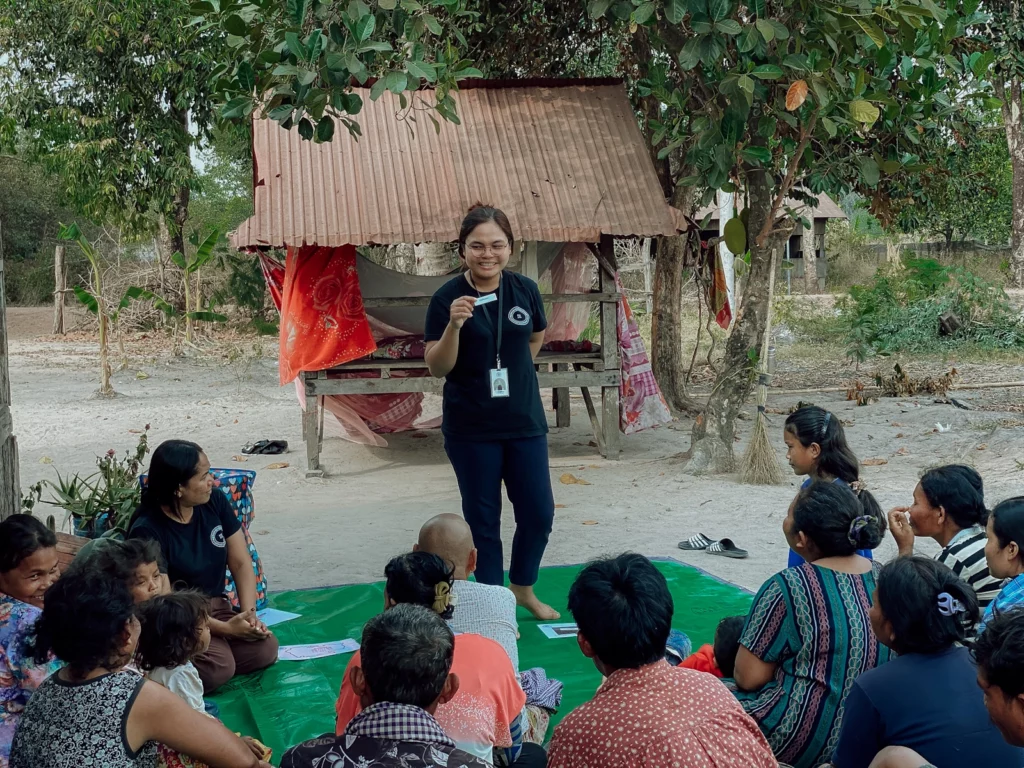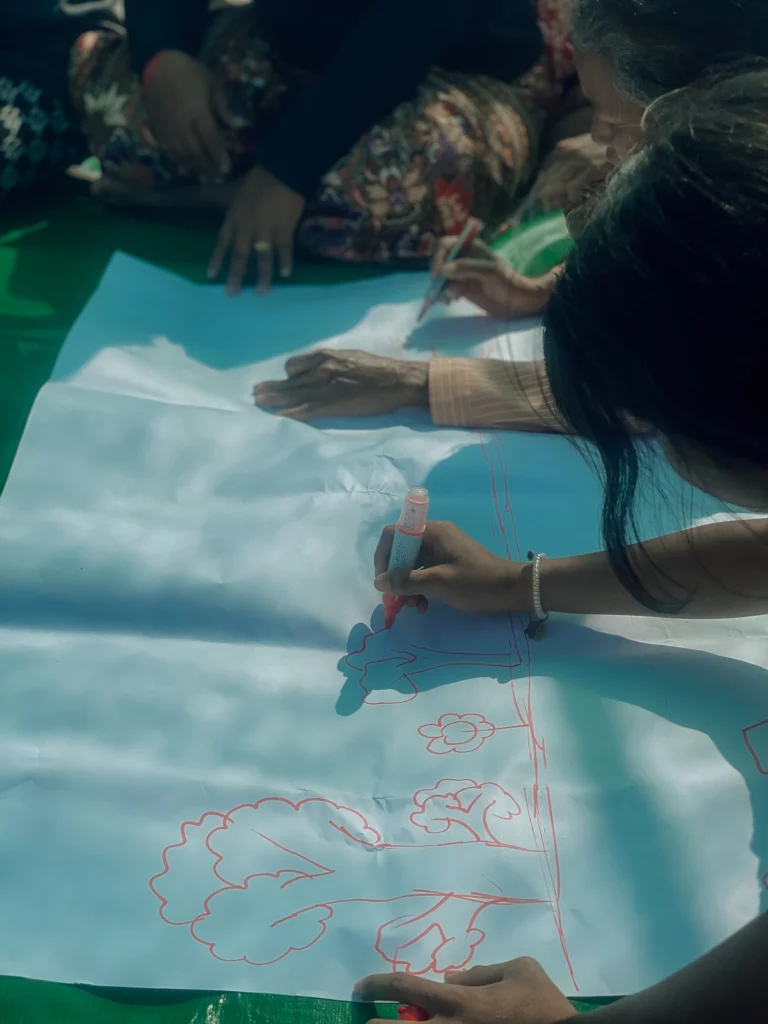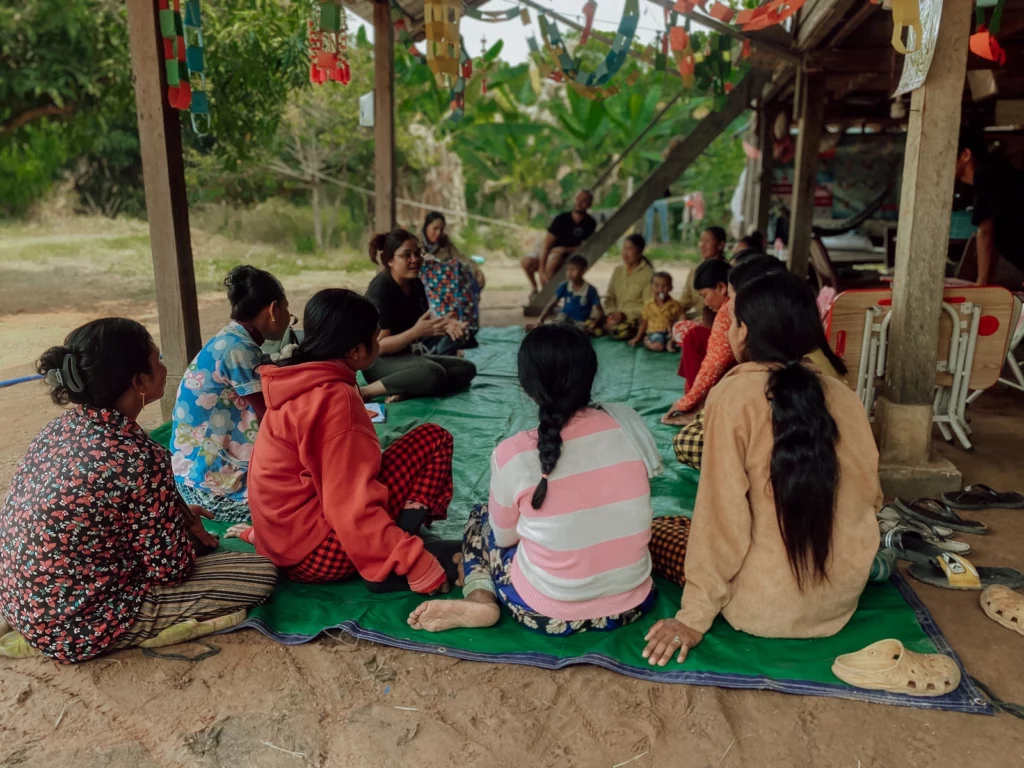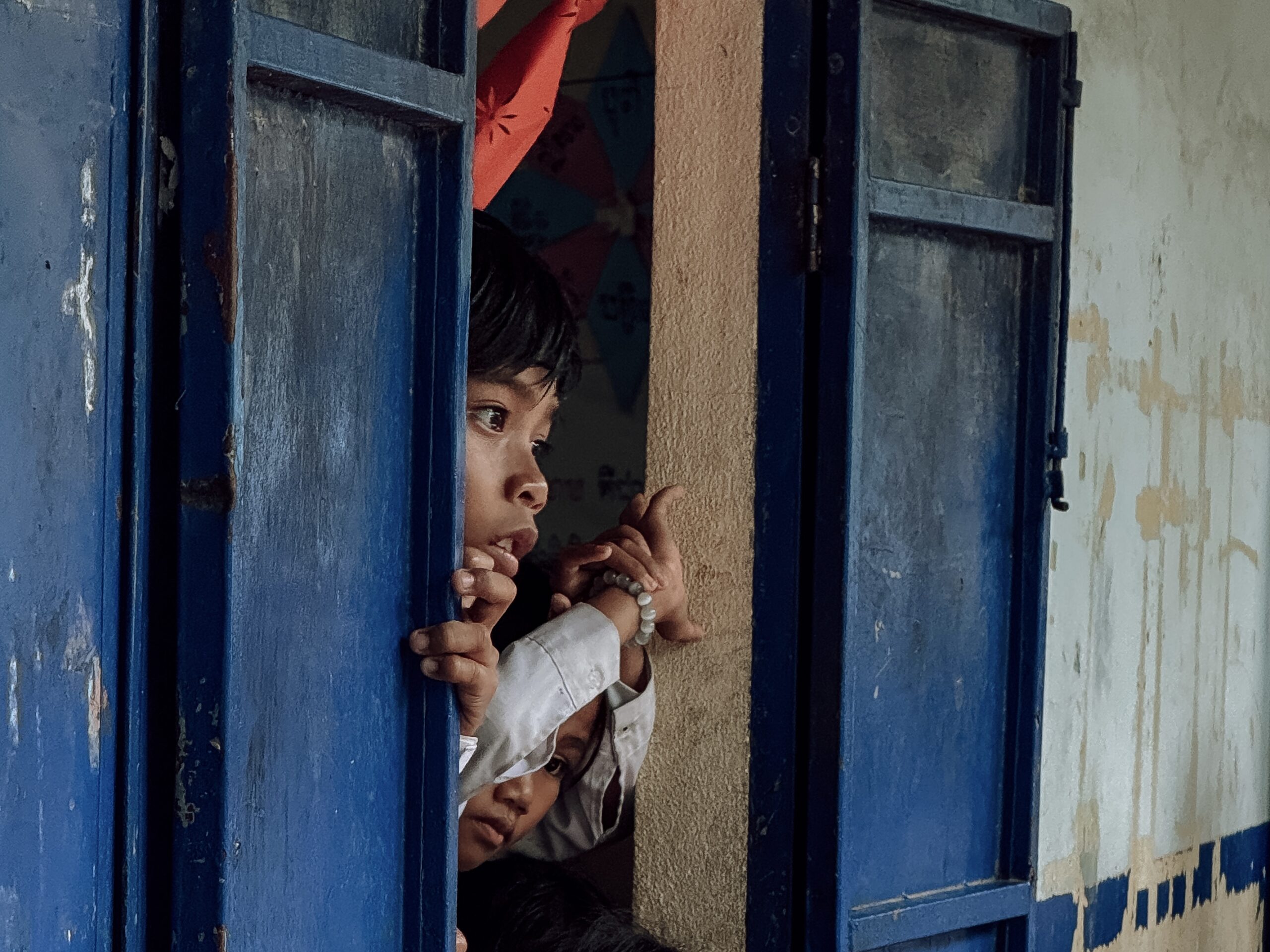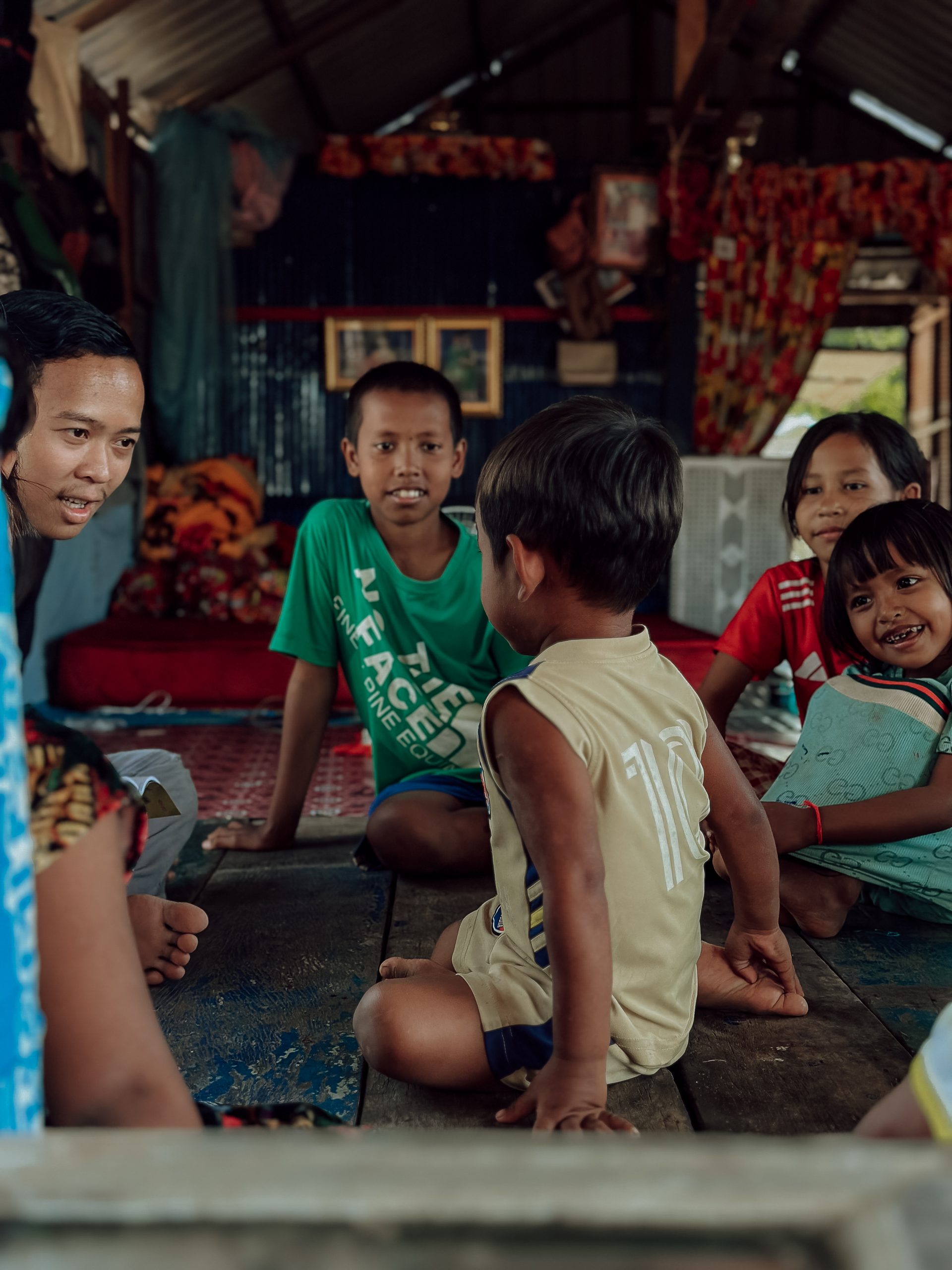
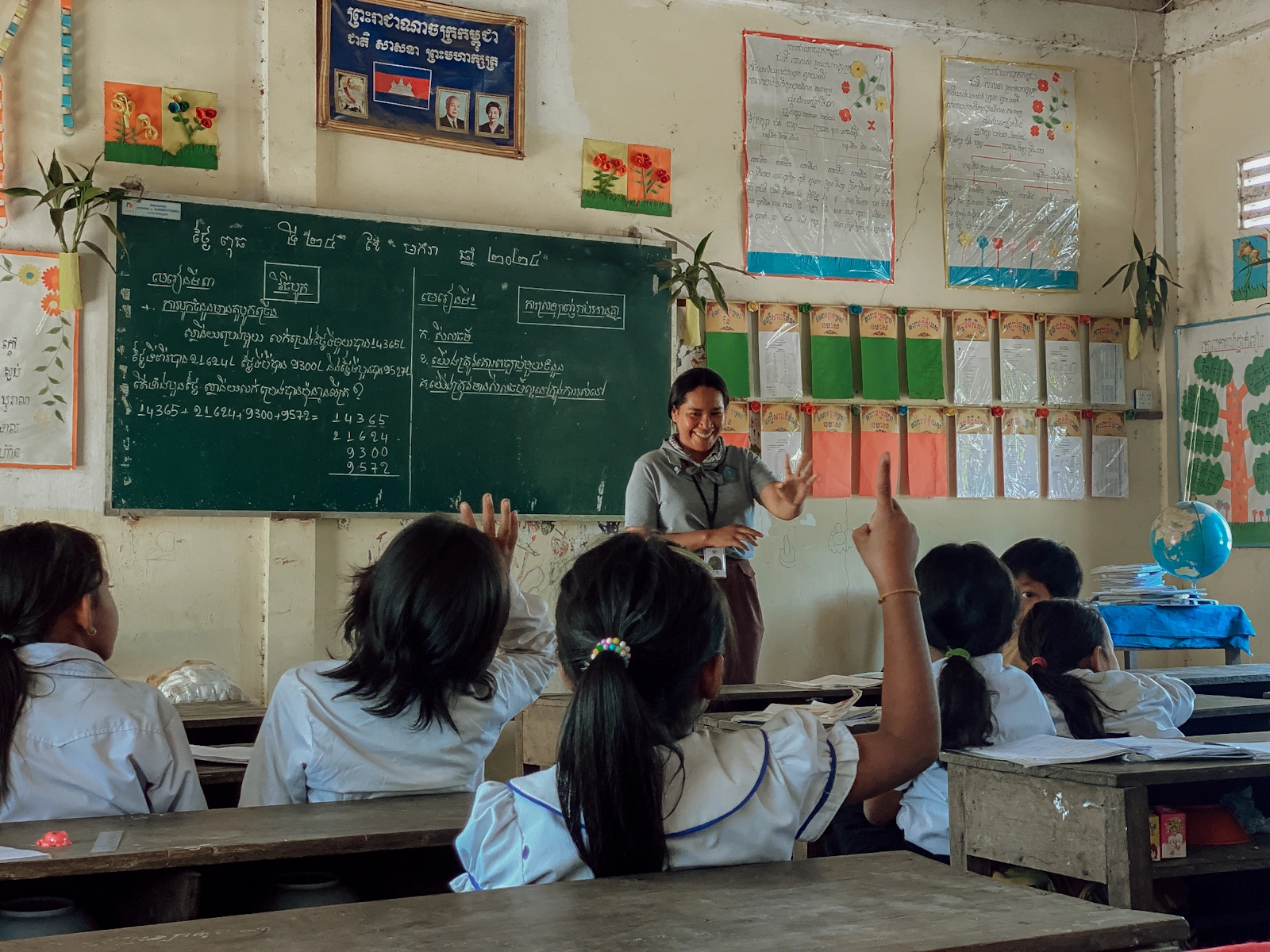
In January 2024, our regular community visits finally kicked off!
So far, we’ve selected six different areas in and around Siem Reap. Our team is well-prepared and full of passion, ready to reach the people in these communities.
But where do you even start when working to prevent human trafficking, and how do you connect with the people who might be affected?
Last year, we spoke with several organizations and gained valuable insights into the mechanisms of human trafficking in Cambodia.
We also had the chance to meet with the Ministry of Social Affairs to ask about at-risk and affected areas. On top of that, we visited different locations ourselves to get a first-hand understanding of the situation.
Using all of this information, we’ve now chosen six communities and met with village leaders, school principals, and teachers to introduce ourselves.
All of these communities have welcomed us warmly and are grateful for the support we’re offering.
The next step is to build relationships, earn trust, understand the unique challenges each community faces, and keep a careful eye out for families who are particularly vulnerable—or even already affected by human trafficking.
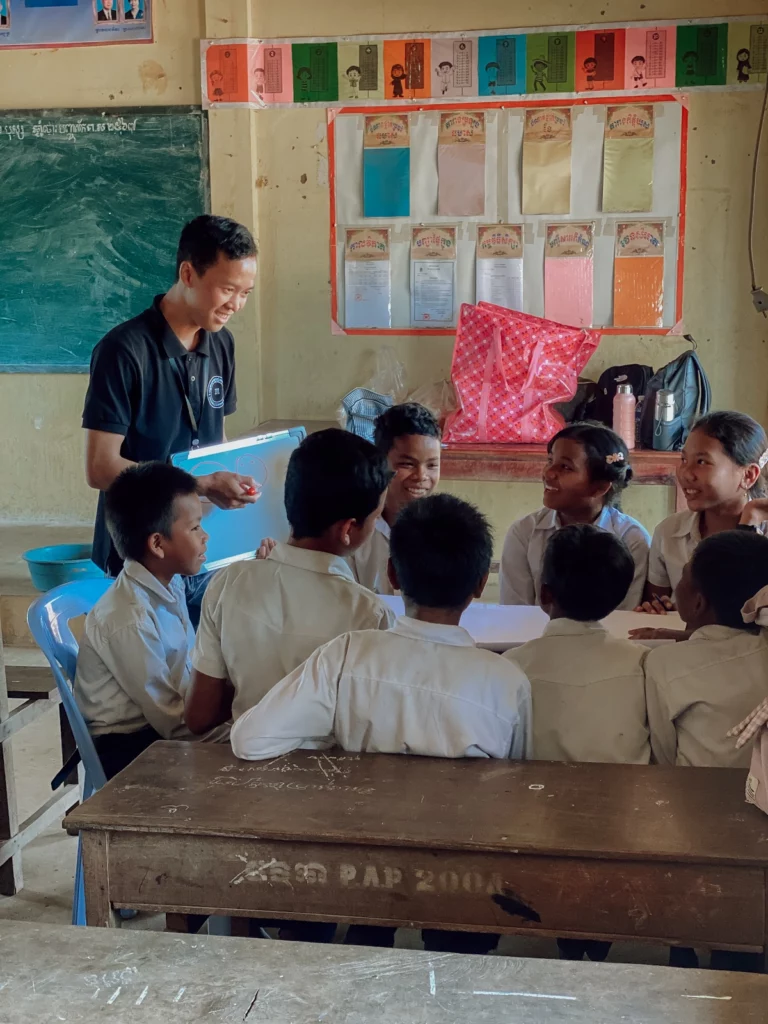
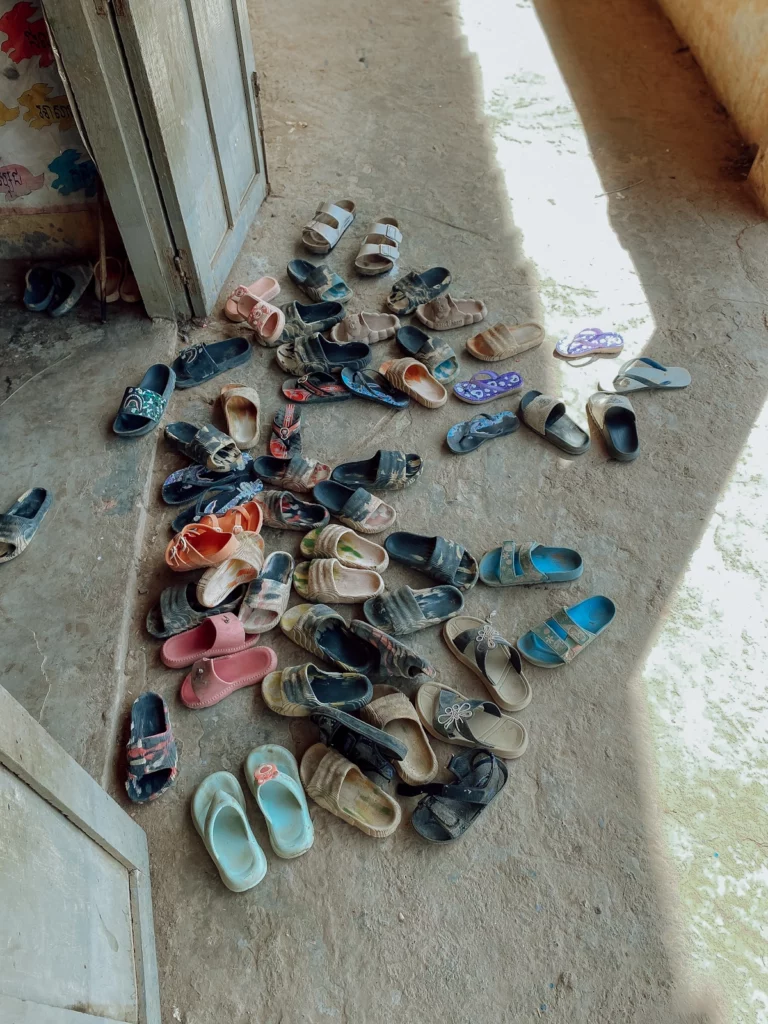
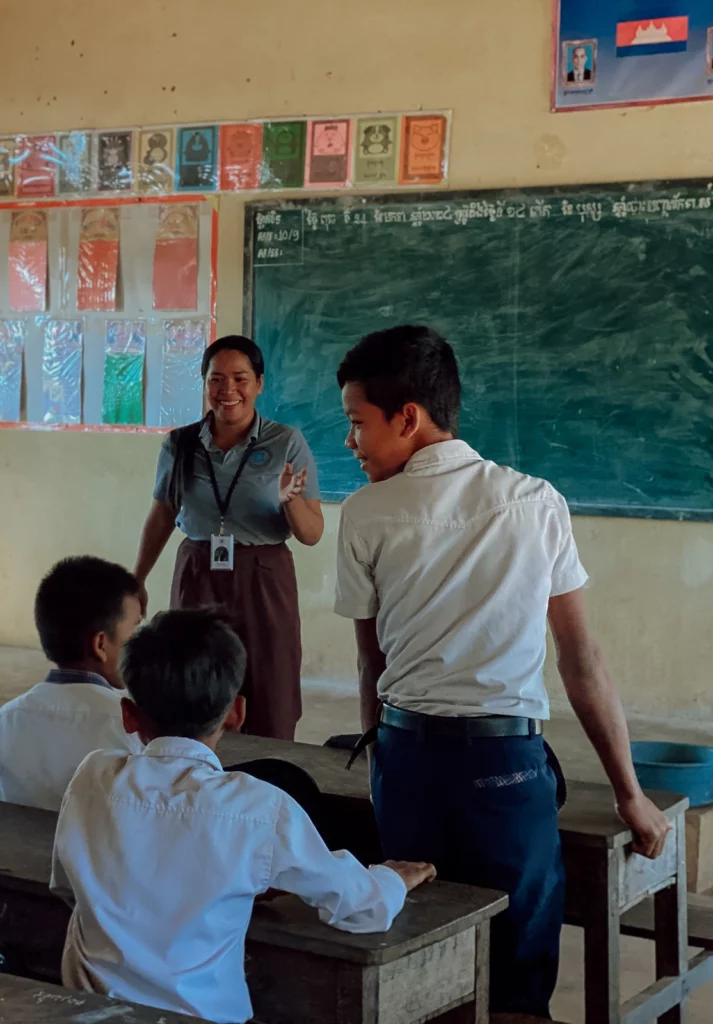
In each community, we work on two fronts: visiting the public schools and meeting with adults and children in the villages.
We collaborate closely with the teachers and the village chiefs, because it’s important to us that they can actively contribute to positive change in their own communities.
From children to grandparents, everyone in the village learns that lasting change and sustainable development comes from themselves. Our role is simply to guide them, spark ideas, and share the knowledge and tools they need along the way.
In the first weeks, our sessions focused on helping the communities understand both our organization and their own responsibility. To put it visually: we’re not here to hand them the "fish on a plate,”but to teach them "“how to fish.”
Unfortunately, in countries like Cambodia, a lot of “development and aid work” still happens mostly through distributing goods or implementing externally designed projects. While well-intentioned, this can create dependency, and communities don’t have the chance to shape their own development. As a result, much of it falls apart as soon as the outside support is gone.
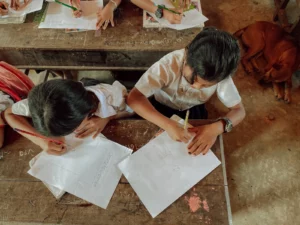
Empowering Communities – Laying the Foundations We are now building the foundation for self-help in the villages, so that together with the communities, we can create the change they want to see — and the change that is needed to prevent human trafficking and exploitation.
We have a big year ahead and plenty of work to do! Do you want to be part of our mission?
Without support and encouragement, we wouldn’t be able to make all of this happen. There are several ways you can get involved:
SHARE our vision and mission.We need more people who are informed about human trafficking and ready to take a stand. This can start with something as simple as being mindful when buying clothes and grow into actively supporting a project.
PRAY for our work, for the safety of our team, and for the people we aim to reach. Your spiritual support gives us strength.
SUPPORT the project with a donation or by helping us connect with new supporters. This year, we need $70,000 to reach all these communities.
We are deeply grateful to everyone who is already helping to make this project possible. And we thank God for guiding our steps and preparing the way. Without His help, we wouldn’t have come this far.